
Chapter 5
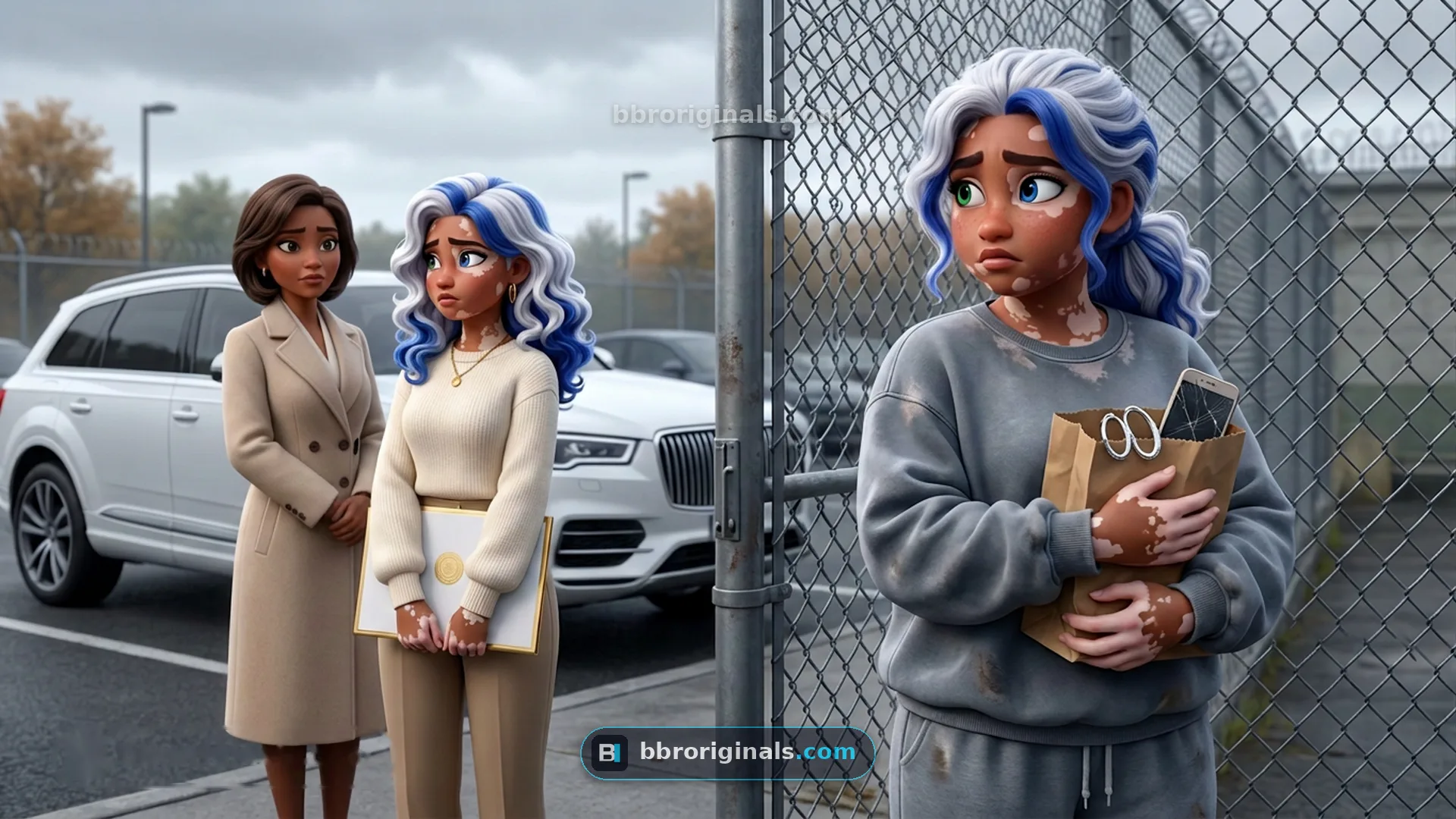
We didn't eat the roast beef, and we didn't sleep in our beds that night.
While my dad stood on the front porch yelling that if we drove out of that driveway we didn't have a dime to our names and we weren't welcome back under his roof, Tessa and I threw four changes of clothes into two gym bags, grabbed the orange shoebox off the dining room table, and got into Tessa's dented ten-year-old Toyota Corolla that she had bought with her laundry-plant money.
We drove out to the twenty-four-hour truck stop diner by the interstate and sat in a vinyl booth in the back corner until the sun came up, drinking black coffee and staring at that shoebox between us.
I'm not going to pretend I wasn't terrified.
My dad had been lying about a lot of things, but he wasn't lying about the law.
My juvenile sentence was completely finished.
My record was sealed.
If I just stayed quiet and got a job flipping burgers in another county, I would never have to see the inside of a locked cell again for the rest of my life.
If we walked into the county courthouse and told the district attorney that we had staged the driver of a fatal crash three years ago, we were walking right back into a fire.
"You don't have to go with me, Mara," Tessa said around six in the morning, her hands wrapped around her coffee mug as the sky turned gray outside the diner window.
"You already did three years for me. Let me go down to the police station by myself this morning and tell them I forced you to do it."
"Nobody forced me to do anything without Dad's help, and they wouldn't believe you without my statement anyway," I told her, reaching across the table to take her cold hand.
"Besides, if there's one thing we aren't ever doing again, it's letting one of us sit in a room and take the heat alone."
"Where do we go first?" she asked, her voice shaking.
"The police station?"
I looked down at the thirty-six unsent letters sticking out of the Nike box.
"No," I said.
"Before the lawyers and the cops turn this into paperwork, there's somebody who deserves to hear it from our own mouths first."
At eight-thirty that morning, we drove across the railroad tracks to the east side of Oakridge and pulled up in front of 412 Maple Street.
It was a small, neat red-brick house with white trim and pot of yellow mums sitting on the concrete steps.
Parked in the gravel driveway right next to the porch was an old blue Ford pickup truck with flat tires and a gray canvas tarp tied down over the bed.
It was David's truck—the one with the broken alternator that he hadn't been able to drive to his shift at the nursing home that Friday night.
My stomach tightened as Tessa turned off the engine.
For three years, Mrs. Peters had been the face I couldn't look at in my nightmares.
We walked up the front walk together.
Tessa was shaking so hard her knees were knocking against each other under her jeans, so I held onto her elbow to keep her steady, and she carried the shoebox against her chest.
I knocked on the screen door.
A minute later, the heavy wooden door inside opened, and Mrs. Grace Peters stood there in her nursing scrub top, holding a mug of tea.
She was in her fifties, with short braided hair streaked with silver and deep lines around her mouth.
When she looked through the screen and saw TWO of us standing on her porch—with the exact same face she had watched get sentenced in juvenile court—she froze.
Her hand tightened on the doorknob until her knuckles turned white.
"Mara?" she said, her voice dropping low and tight, looking back and forth between my face and Tessa's.
"What are you doing at my house? I saw in the paper your sentence was up this week. Did you come here to ask me for forgiveness so you can feel better about yourself? Because you can turn right around and get off my porch."
Normally, that was the moment where I would have stepped forward to shield Tessa.
I almost opened my mouth to speak for her.
Instead, I closed my mouth and took half a step back.
Tessa stepped up to the screen door.
Tears were running straight down her cheeks and dripping off her chin onto her sweater, but for the first time in three years, she didn't look down at her shoes.
She looked right into Mrs. Peters eyes.
"No, ma'am," Tessa said, her voice trembling so hard it cracked in the middle.
"We didn't come to ask you to forgive us. I'm Mara's twin sister, Tessa, and I came to tell you that Mara wasn't driving the car that hit David on Route 4. I was."
Mrs. Peters tea mug tilted in her hand, spilling hot brown liquid across the porch concrete.
She didn't even notice it.
"What did you just say to me?"
Mrs. Peters whispered.
"I had been drinking at a party," Tessa said, the words pouring out of her fast and raw before she could lose her nerve.
"Mara was sober in the passenger seat, and she tried to take my keys, and I wouldn't let her. I looked down at a text message from our mom on Route 4 and I drifted off the road and hit David. We called our dad before we called 911. Because Mara was sober and I was drunk, our dad sent me home in his truck and told Mara to tell the police she was driving alone so I wouldn't go to prison and lose my college scholarship. We lied to the police, we lied to the judge, and we lied to you."
Tessa set the orange shoebox down on the top concrete step by the yellow mums.
"Those are the letters I wrote you every month while Mara was locked up," Tessa said, wiping her nose with the back of her hand.
"I'm the one who has been mailing the money orders from the P.O. Box in Denton. We are leaving right now to drive down to the county prosecutor's office so I can turn myself in and give a full confession under oath. I just wanted you to know the truth before you read it in the newspaper."
Mrs. Peters unlatched the screen door and pushed it open a few inches.
She didn't hug us.
Why would she?
This wasn't a movie.
We had killed her only child and lied to her face for three years.
She looked at me, breathing hard, tears filling her eyes.
"I sat in that courtroom for six days praying to God to help me forgive you, Mara," she said, her voice shaking with grief and anger.
"And the whole time you were sitting there protecting your father's lie."
"I am so sorry, Mrs. Peters," I whispered, looking her dead in the eye without flinching away from the hurt on her face.
"I was seventeen and I was scared, and I was wrong."
Then Mrs. Peters looked down at the shoebox by her feet, and back up at Tessa's wet, pale face.
For a long moment, nobody moved as the autumn wind blew dry leaves across the porch steps.
"Go down to the courthouse," Mrs. Peters said quietly, her voice thick with tears.
"Wait for me in the prosecutor's lobby. I am going to put my coat on and drive down there right behind you to make sure those people listen to every word you have to say."
And she did.
Thirty minutes later, Tessa and I sat side by side on a bench in the county district attorney's office with Mrs. Peters sitting right across from us, and we blew our parents' spotless life wide open.
I won't lie to you—the fallout was brutal.
The second the county detectives went out to my dad's insurance office to question him about tampering with a crime scene and coercing a minor, my parents hired the most expensive criminal defense lawyer in the city exclusively to protect themselves.
My dad couldn't deny he had driven out to Route 4 that night, because his name was right there on the original police report waiting with me by the ditch.
Instead, under oath, my father and mother swore to the investigators that when they pulled up to the crash scene in his truck, I was standing by the Civic completely alone.
They claimed Tessa had already come home from the party earlier that night, that my mom had only driven the truck back home from the crash scene because seeing the body in the ditch made her hysterical, and that when my dad told the troopers I was driving alone, he was simply repeating the lie I had told him!
They swore that if Tessa had been behind the wheel, she must have run home through the woods before they even arrived, and that Tessa and I had cooked up the whole switch by ourselves and fooled them for three years.
My parents avoided jail time, though it didn't save their image.
Once the truth hit the front page of the local paper and Mrs. Peters told everyone at the hospital what had really happened, half of my dad's insurance clients pulled their policies within a month, and he had to step down as deacon at First Baptist.
People from our old church still cross to the other side of the street when they see me in the grocery store, like our family's mess is a disease you can catch from breathing the same air.
As for me, because I was seventeen when the crash happened and I had already served every single day of a three-year sentence for a crime I didn't commit, the district attorney declined to file new perjury charges against me in exchange for my sworn testimony.
Tessa pled guilty in adult court to vehicular homicide and felony obstruction of justice.
She was facing up to eight years in the state women's correctional facility.
On the day of her sentencing, my mom and dad didn't even show up to the courtroom.
I sat alone in the front row right behind Tessa.
Then, right before the judge read the sentence, Mrs. Grace Peters stood up from the victim's bench, walked up to the microphone, and told the judge that because Tessa had come forward voluntarily on her own two feet when the case was legally closed and buried, she was asking the court for mercy.
The judge sentenced Tessa to three years in a minimum-security facility downstate, with eligibility for work-release in eighteen months.
I am twenty-one years old now.
I moved forty minutes south of Oakridge to be closer to the facility where Tessa is serving her time.
I rent a tiny one-room studio apartment above a hardware store, and I work forty-five hours a week at a big commercial plant nursery loading bags of mulch and taking care of the greenhouses.
My hands are rough and calloused, my truck is loud and rusty, and I haven't spoken a single word to either of my parents in over a year.
Every Saturday morning at nine o'clock, I put on a clean shirt, drive twenty minutes down the highway, and walk through the detectors into the visiting room at the state women's facility.
When the door opens and Tessa walks out in her blue state jumpsuit, she doesn't look down at the floor anymore.
She looks straight across the room until her eyes find mine, walks right over to our plastic table, and holds onto both of my hands for the full two hours until the guard calls time.
Every second Sunday of the month, after church lets out, I drive back into Oakridge, pull into the driveway at 412 Maple Street behind David's old blue truck, and help Mrs. Peters weed her vegetable garden and carry her groceries inside.
We don't pretend everything is fixed, and we don't pretend the past didn't happen.
We just sit on her front porch steps with two glasses of iced tea, talk about David, and take each day at a time.
More stories like this

Marriage & Relationships
While I Was in a Coma, My Husband Gave Away My Kids
POV: YOUR HUSBAND TOOK YOUR KIDS FROM YOU
Content warnings
- Childhood neglect
Marriage & Relationships
I Married the Man Who Saved Me—Then Learned He Staged the Attack
POV: YOU MARRIED YOUR ATTACKER!
Content warnings
- Emotional abuse
- Violence
- Manipulation

Family & In-Law Conflict
I Found Letters From a 40-Year-Old in My Teen Daughter’s Backpack
POV: YOUR TEENAGE DAUGHTER IS IN LOVE WITH A 40 YEAR OLD MAN
© 2026 BBR Originals. This story is protected by copyright. Please share the link rather than copying the text. Content-use policy
Reader comments
Share what this story brought up for you. Please be kind to other readers. Links are not allowed. We may remove comments that break these rules.
No comments yet. You can be the first to write one.
Write a comment