
Chapter 3
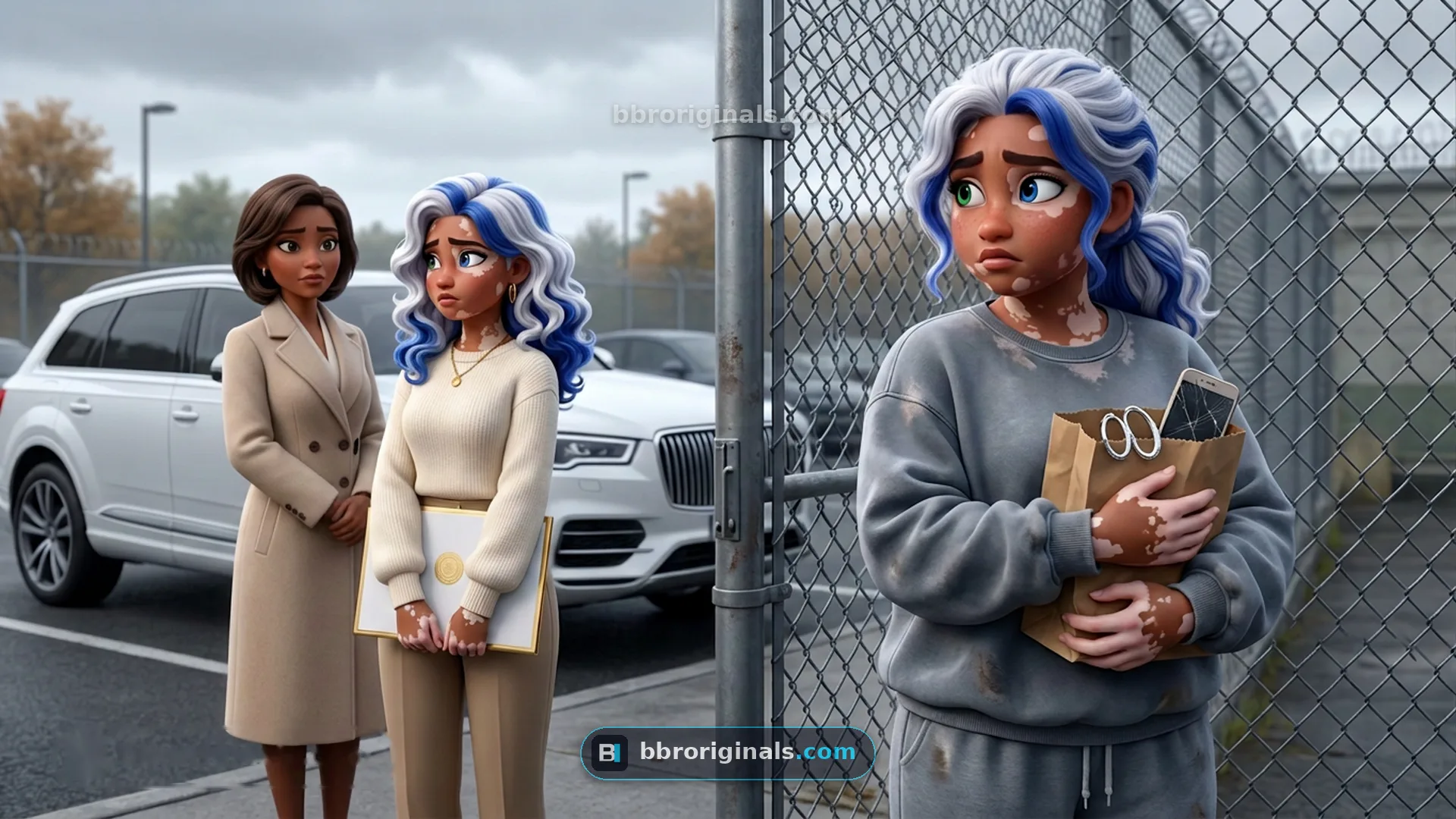
My dad was wrong about the lighter sentence.
Or maybe he wasn't wrong—maybe he knew all along and just said whatever it took to keep me sitting in that driver's seat until the state troopers put the handcuffs on my wrists.
Because our windshield was smashed and David's bicycle had been dragged for eighty feet without the brakes ever being touched, the county prosecutor didn't see it as a simple accident.
He saw a reckless seventeen-year-old girl—the "wild twin" who had gotten detention twice in junior year for skipping study hall—plowing down a nursing student on the side of the road because she wasn't paying attention.
During the two months between the crash and my sentencing, they held me in the county youth center.
Whenever our fancy lawyer came to the visiting room with my dad, I barely got to say three words.
My dad did all the talking, just like he always had.
In December, right before my plea hearing, I broke down crying at the metal visiting table.
I told my dad I was scared, that the prosecutor was asking for three years in Pine Creek, and that maybe we should just tell the judge that Tessa and I had both been in the car and got distracted.
My dad leaned across the table so fast the guard by the door stood up straighter.
"If you change one word of your story now, Mara."
My dad whispered, his voice like ice, "you will be admitting to filing a false police report and felony obstruction of justice. They won't just arrest Tessa for drunk driving and throw her into an adult women's penitentiary—they will charge both of you with conspiracy. Instead of getting out at twenty with a clean slate, you'll both be felons until you're thirty. Do not ruin what you did for your sister."
So I walked into that courtroom in a stiff navy blazer my mom bought at the mall, kept my eyes glued to the wood grain of the defense table, and said, "Guilty, Your Honor."
I didn't dare turn around and look at the wooden benches behind me where David Peters's mother, Mrs. Grace Peters, was sitting.
I didn't have to look at her to hear her.
Every time the prosecutor described the crash, Mrs. Peters made this low, broken crying sound into her handkerchief that made my skin go cold.
That was the day I learned how to turn my brain off.
I felt like I'd shut down completely.
I couldn't feel anything anymore.
Tessa wasn't in the courtroom that day.
During the three years I spent locked up at Pine Creek, Tessa didn't come to visit me once.
Every month when my mom and dad drove up for forty-five minutes on Sunday afternoon, I'd ask where she was.
Every month, my dad would sigh, pat my hand across the plastic table, and say, "Tessa's buried in her coursework, Mara, and honestly, the thought of seeing you in this uniform gives her panic attacks. She told us it's better for her mental health if she focuses on her future so your sacrifice wasn't wasted."
I swallowed that, too.
Even when it made me bitter and sick inside, I swallowed it because I thought that was just who Tessa was—fragile and selfish when things got hard.
Which brings me back to my twentieth birthday, sitting in the back of my mom's white SUV as we drove back after my release.
Nobody had spoken for twenty minutes.
When we stopped at the traffic light near the hardware shop, a teenage boy rode his mountain bike across the pedestrian crossing in front of our car.
As he rode past the side of the SUV, he rang the small silver bell on his handlebars -ring-ring- to warn an elderly woman stepping onto the road.
In the front passenger seat, Tessa flinched so hard at that tiny sound that she threw both hands over her head, hit the locked car door with her elbow, and dropped her purse onto the floor, gasping like somebody had thrown boiling water in her face.
"Tessa, honestly, calm down," my mom snapped, checking her lipstick in the visor mirror as the light turned green.
"It's just a kid on a bike."
I stared at Tessa's shaking shoulders from the backseat.
Ten minutes later, we pulled into our driveway.
When I walked through our front door for the first time in three years, the very first thing I saw in the hallway was that gold frame with Tessa's Emory University scholarship letter hanging right where it had been in senior year.
Right next to it was a framed portrait of Tessa in her high school cap and gown.
There were no pictures of me in the hallway at all.
"Why is Tessa home on a Wednesday in October?"
I asked my mom as she hung her coat in the closet.
"Doesn't Emory have classes all week?"
My mom didn't look at me.
She smoothed her hair and said quickly, "Oh, Tessa decided Georgia was too far from home after the first month, so she came back to take online classes from her bedroom. Go on upstairs and wash up, Mara. Your dad and I are running out to the butcher shop to pick up the roast. We'll be back in forty minutes."
As soon as our parents backed out of the driveway, I walked upstairs.
The bathroom door was shut and the shower water was running—Tessa had gone straight in there without saying a word to me.
I went into my old bedroom.
Half of my clothes had been packed away in boxes in the attic, and the cheap sneakers I had worn home from juvie had a hole in the side of the rubber sole.
Since Tessa and I wore the exact same size eight shoe, I walked across the hallway into her bedroom and opened her closet door to borrow a pair of her old white canvas sneakers.
Her closet used to be the neatest place in the house, with all her sweaters organized by color.
Now it was a mess of laundry piled on the floor.
When I knelt down to move a pile of sweatshirts out of the way to reach her shoe rack, my hand hit an old orange Nike shoebox shoved way in the back corner behind her winter boots.
Taped to the top of the box was a white bank envelope.
I don't know why I picked it up.
Maybe because the box felt way too heavy to have shoes inside.
I peeled the piece of scotch tape off the white envelope first.
Inside was a thick stack of new twenty- and fifty-dollar bills, worth at least six hundred dollars.
There was also a yellow pay slip from a large laundry business near the highway.
It showed that Tessa worked from 11 at night until 7 in the morning, ironing sheets for twelve dollars an hour.
My forehead wrinkled.
Why was the "future doctor" working nights in a hot laundry warehouse?
I pulled the lid off the Nike shoebox.
There were no shoes inside.
At the bottom was a thick stack of pink Western Union money-order receipts going back almost three years.
Every two weeks, without missing a single payday, three hundred dollars had been mailed from a P.O.
Box in the next town over to Grace Peters, 412 Maple Street.
Sitting on top of the receipts were thirty-six white envelopes, bundled together with a rubber band.
Every single one was addressed to Mrs. Grace Peters in Tessa's neat handwriting, dated on the twenty-eighth of every month since the crash, with no stamps on them.
With my hands shaking, I pulled the top envelope out of the bundle and unfolded the lined notebook paper inside.
Dear Mrs. Peters, it read.
It has been thirty-five months since the night I killed your son David. Every morning when I wake up, I tell myself today is the day I am going to walk down to the police station and tell them I was the one behind the wheel, even if it means my dad makes good on his threat and the prosecutor adds five years to Mara's sentence for lying under oath. Mara hates me so much she won't even let me put my name on her visitor list at Pine Creek, and she should hate me. I ruined her life and I took your son's life—
Downstairs, the front door slammed shut.
My dad had come home early in his pickup truck while my mom was still at the grocery store.
At the same time, the bathroom door clicked open in the upstairs hall, and Tessa stepped out with a towel wrapped around her wet hair.
I stood frozen in her bedroom, clutching the letter and peeking through the narrow gap between the door and the frame as Dad climbed the stairs.
"Dad?"
Tessa called from the hallway, her voice shaky and uncertain.
"Is Mara in her room? I can't do this. She wouldn't even talk to me in the car. Please let me go in there and tell her how sorry I am—"
"Lower your voice right now, Tessa," my dad said sharply, stopping at the top of the stairs.
"We already went over this. Your sister chose this. That night on the road, she insisted on taking the blame before I could even stop her, and she made your mother and me swear for three years not to let you visit her because she said looking at your face made her furious. If you walk in there crying and bring up that night, you're going to set her off and ruin your mother's dinner. Go put on a nice dress and keep your mouth shut."
More stories like this

Marriage & Relationships
While I Was in a Coma, My Husband Gave Away My Kids
POV: YOUR HUSBAND TOOK YOUR KIDS FROM YOU
Content warnings
- Childhood neglect
Marriage & Relationships
I Married the Man Who Saved Me—Then Learned He Staged the Attack
POV: YOU MARRIED YOUR ATTACKER!
Content warnings
- Emotional abuse
- Violence
- Manipulation
Family & In-Law Conflict
I Found Letters From a 40-Year-Old in My Teen Daughter’s Backpack
POV: YOUR TEENAGE DAUGHTER IS IN LOVE WITH A 40 YEAR OLD MAN
© 2026 BBR Originals. This story is protected by copyright. Please share the link rather than copying the text. Content-use policy
Reader comments
Share what this story brought up for you. Please be kind to other readers. Links are not allowed. We may remove comments that break these rules.
No comments yet. You can be the first to write one.
Write a comment