
Chapter 3
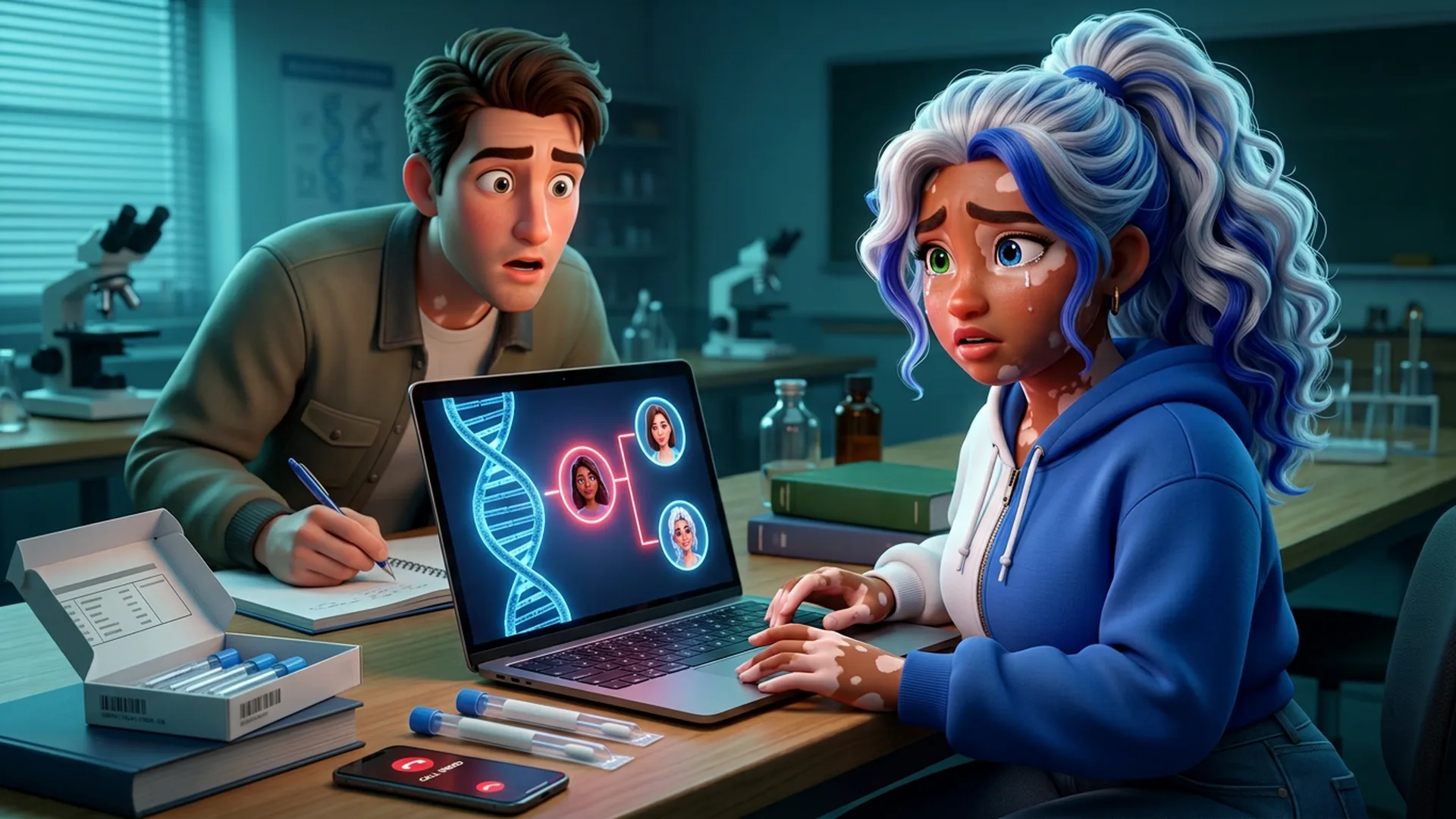
"No!! PLEASE! Wake back up!"
I cried, shaking her warm hand on the bedsheet.
"Mom, please look at me again!"
Dr. Gabriel stepped into the room with a nurse right behind him and walked quickly to the other side of the bed.
He switched off the machine to stop the flat tone, placed two fingers against the side of her neck, and then pressed his stethoscope against her chest, listening in silence.
After a full minute, he took the stethoscope out of his ears, checked her eyes with a pocket light, and glanced up at the wall clock.
"Time of death, four-eighteen," Dr. Gabriel announced clearly for the nurse to write down on the chart.
Then he lowered his head and looked across the bed at me.
"I'm so sorry, Martha. She's gone. She held on until she heard your voice."
Right then, Cynthia and Dan rushed through the doorway.
When Cynthia saw Victoria lying motionless and found me on my knees, crying into the blanket, she cried out loudly.
Then she rushed over and wrapped her arms around Victoria's shoulders.
I couldn't stay in that room any longer.
I stood up, stumbled backward out the door into the main passage, and leaned my back against the wall, sliding down until I was sitting on the floor with my hands over my face.
A few minutes later, the door clicked shut.
Dr. Gabriel stepped out into the passage and crouched down beside me, holding out a cup of water.
"Drink a sip of this, Martha," he said gently.
I pushed the cup away and looked up at him with blurry eyes.
"They just told me who she was. Twenty-three years, Dr. Gabriel, and I just found out half an hour ago that she was my mother. And do you know what I did when I found out why she was sick? I laughed in her face at the dinner table."
"Victoria never held anger toward you," Dr. Gabriel said, sitting down on the bench across from me.
"You were all she ever talked about when I checked on her."
"I don't understand why she died so young," I said, wiping my cheeks with my sleeves.
"My grandparents told me she went away for treatment when I was twelve. If the doctors found the infection back then, why didn't the medicine save her?"
Dr. Gabriel looked at me carefully, folding his hands over his knees.
"Did your family not tell you about her treatment plan?"
"Tell me what?"
I asked, sitting up straighter.
"Martha, the infection your mother had does terrible damage if you leave it alone, yes," Dr. Gabriel explained.
"However, with modern daily pills, people manage it for decades and live completely normal lives. In fact, she didn't even need to wash her cup and plate separately at your house. I told her a dozen times that she could never pass her illness to you through dishes or hugs. She only did that because she felt so much shame and was terrified of ever putting you at risk."
My stomach dropped.
"Wait. If daily pills could have kept her alive for decades, then why did her organs fail right now?"
Dr. Gabriel let out a slow breath.
"Because the daily pills only keep the virus weakened if you keep taking them, Martha. After she came back from that city hospital, your mother's blood tests were completely fine for eight years. Then, three years ago, right around the time you turned twenty, she stopped coming to our clinic pharmacy to pick up her pill refills. Without the daily medicine, the virus was strengthened. By the time she collapsed at work a few months ago and came back to me, the damage to her liver was too far gone to fix."
I stared at him, the words ringing in my ears.
"Three years ago? She chose to stop taking her pills?"
"I begged her to start taking them again three years ago," Dr. Gabriel said sadly.
"She just smiled at me and said she was tired of fighting. I never knew why."
When I drove myself back to the house that evening, a dark, hot anger was burning inside my chest.
I walked into the kitchen where Cynthia was standing by the stove heating up a kettle of water.
"Did you know she stopped taking her pills three years ago?"
I demanded, stopping in the middle of the kitchen.
Cynthia turned around, her face pale and exhausted.
"Dr. Gabriel only told us last month, Martha. She hid it from us. We thought she was still taking them."
"You forced her to live a lie under your roof, and she spent her whole life on her knees praying to a God who didn't even save her!"
I shouted, hitting my hand against the kitchen table.
"If God is real, He's cruel! Do you hear me? He is cruel for letting her live and die like that!"
Before Cynthia could answer, someone knocked softly on the back kitchen door.
Dan walked in and opened the door.
Standing on the porch was Elvis, a kind man in his forties who had been Victoria's closest friend at her church for as long as I could remember.
He was holding a glass dish of warm food wrapped in a clean cloth.
"I'm so sorry to bother you all right now," Elvis said, his eyes red and swollen.
"The ladies from the church prayer group made dinner for you. And, Cynthia, before Victoria went into the care center last week, she asked me to come by when it was time and pick up her blue dress from her closet for the burial home."
"Thank you, Elvis," Cynthia cried, taking the warm dish from him.
"I'll go upstairs and get the dress for you right now."
While Elvis waited on the porch and then walked back toward his car in the driveway with the dress bag over his arm, I stepped out the back door into the night air.
"Elvis, wait!"
I called out, jogging down the steps toward the driveway.
Elvis stopped beside his car door and turned to face me.
"How are you holding up, Martha?"
"Did you know I was her daughter?"
I asked him point-blank.
Elvis nodded slowly.
"Yes. She told me ten years ago because the secret was hurting her so badly she needed one person at church to pray with her about it."
I stepped closer to him, my voice shaking.
"You drove her to her doctor visits, didn't you? Dr. Gabriel just told me today that Victoria could have lived a full life if she kept taking her medicine. He said she quit taking her pills three years ago when I turned twenty. Did she tell you why she stopped?"
Elvis looked down at the ground, biting his lip.
He looked like he wanted to get into his car and drive away.
"Please don't lie to me, Elvis," I begged, tears spilling down my face again.
"Everybody in this house has lied to me since the day I was born. Tell me the truth!"
Elvis raised his head and looked at me with deep sadness in his eyes.
"Martha, do you remember your twentieth birthday dinner here at the house?"
I froze.
Of course I remembered it.
I had invited Cole and four other friends from the university over for dinner.
Victoria had spent all afternoon baking me a chocolate cake from scratch and wrote May God bless your twentieth year inside a card.
When I opened the card in front of my friends, I had read it out loud in a mocking voice and laughed, telling everyone at the table that my forty-year-old sister was a pathetic religious loser who had no life of her own and just hung around to annoy me.
"I picked Victoria up for church study right after your party ended that night," Elvis said softly.
"She got into the passenger seat of my car, put her face in her hands, and cried harder than I have ever heard anyone cry. She told me she had been taking those medications for eight years so she could stay alive for you, hoping one day you'd let her love you."
"No," I whispered, shaking my head as I backed away from him.
"No, don't say it."
"She looked at me in the car that night," Elvis continued, a tear rolling down his cheek, "and she said, 'I failed to earn her love, Elvis. Every time I walk into a room, my face makes her angry. If she doesn't want me around, I won't make her or force her anymore.' That was the week she stopped refilling her prescriptions, Martha. I tried to change her mind, yet she had made up her mind."
Elvis got into his car and drove down the street, leaving me standing alone in the driveway.
I pressed both hands over my mouth to keep from screaming.
The illness hadn't killed my mother.
My mouth had killed her.
My cruel jokes had made my own mother think the best gift she could give me was to disappear.
I walked back inside the house, went straight upstairs past Cynthia and Dan, and walked into Victoria's bedroom.
I shut the door and turned the lock.
Her room was neat.
I walked over to her closet, slid the door open, and pulled down an old carton from the top shelf.
Sitting down on the carpet beside her bed, I lifted the lid.
Inside were dozens of printed photographs.
I picked them up one by one.
Every single photo was a blurry, zoomed-in picture of me taken from the back row of crowded school halls—me at eleven getting my primary school certificate, me at fifteen winning a science prize, me at eighteen throwing my graduation cap in the air.
She had been standing at the back doors for every single one of them.
Under the photos lay a worn spiral notebook.
I opened it and flipped through the pages.
My name was written in blue ink on every single sheet, dated over twenty years.
Lord, keep Martha safe at school today. Lord, please heal the hurt in Martha's heart so she knows she isn't alone.
At the very bottom of the box sat her mobile phone alongside a charging wire.
My fingers fumbled as I plugged the wire into the wall socket beside the bed and pressed the power button.
When the screen lit up, there was no password lock.
Right in the middle of the screen was the voice recorder app, open to one saved audio file from two weeks ago.
The title of the recording was
For Martha.
Sitting alone on the floor in the dark, I pressed my thumb against the play button, and my mother's soft voice filled the room.
More stories like this
Family & In-Law Conflict
I Raised My Little Sister—Now She Calls Our Absent Mom Her Best Friend and Ignores Me
POV: YOU RAISED HER. SHE CHOSE THE MOM WHO LEFT.
Content warnings
- Childhood neglect
Marriage & Relationships
I Married the Man Who Saved Me—Then Learned He Staged the Attack
POV: YOU MARRIED YOUR ATTACKER!
Content warnings
- Emotional abuse
- Violence
- Manipulation
Family & In-Law Conflict
I Found Letters From a 40-Year-Old in My Teen Daughter’s Backpack
POV: YOUR TEENAGE DAUGHTER IS IN LOVE WITH A 40 YEAR OLD MAN
© 2026 BBR Originals. This story is protected by copyright. Please share the link rather than copying the text. Content-use policy
Reader comments
Share what this story brought up for you. Please be kind to other readers. Links are not allowed. We may remove comments that break these rules.
No comments yet. You can be the first to write one.
Write a comment